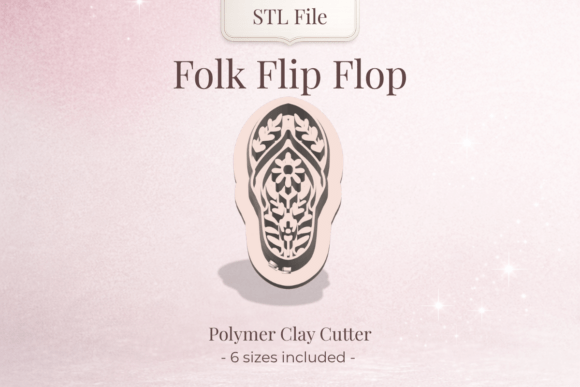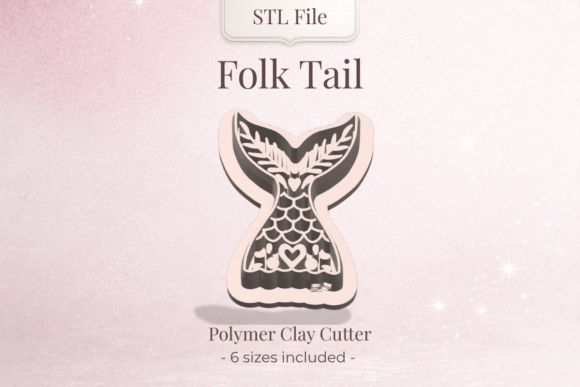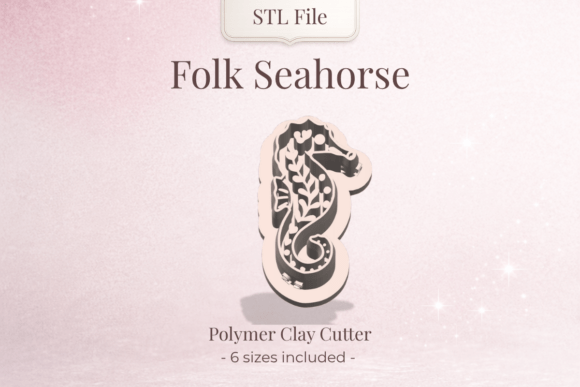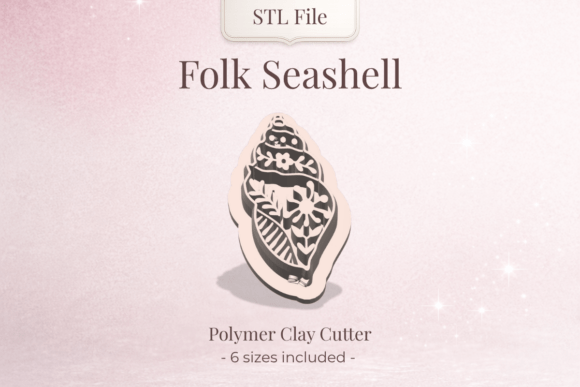
Clay Cutter STL – Folk Whale: A 3D Printable Floral Tool
Creating consistent, intricate shapes from polymer clay often requires specialized tools that can be expensive or difficult to source. The Clay Cutter STL – Folk Whale offers a modern solution for artists who want to craft elegant floral jewelry without relying on mass-produced molds. This digital design allows you to manufacture your own cutting tool using a standard FDM 3D printer, bridging the gap between digital creativity and tactile craftsmanship. Whether you are a seasoned jeweler looking to expand your inventory or a beginner exploring the world of polymer clay, this file provides a versatile foundation for creating beautiful earrings and decorative elements.
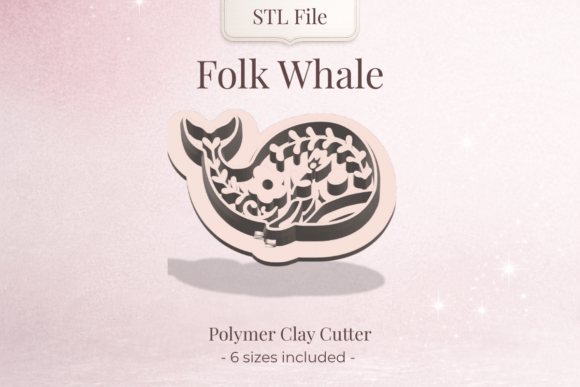
The design features a distinctive whale-inspired floral motif, created by S.I. Originals, which serves as more than just a shape; it is a functional instrument optimized for clean slicing through soft materials. By downloading the STL file, you gain access to six different sizes ranging from 25 mm to 50 mm, each equipped with a precise 0.4 mm cutting edge. This level of detail ensures that every cut is sharp and uniform, eliminating the jagged edges that often plague handmade jewelry when using improvised tools.
Why Different Creators Value Custom Cutters
The appeal of the Clay Cutter STL – Folk Whale extends beyond simple utility. For different types of creators, the value proposition shifts based on their specific goals, resources, and skill levels. Understanding these nuances helps determine if this digital file fits your current workflow.
For Hobbyists and Beginners
For those new to polymer clay, the learning curve can be steep. One of the biggest challenges is achieving professional-looking results without a significant investment in equipment. Traditional metal cutters are durable but costly, and buying a full set of various sizes can quickly drain a hobbyist's budget. The Folk Whale cutter changes this dynamic by offering a low-cost entry point.
Beginners often prioritize ease of use and immediate gratification. With this STL file, a user with a basic 3D printer can produce a high-quality tool in a few hours. The sturdy wall design means the cutter won't bend under light pressure, providing confidence while learning shaping techniques. Furthermore, having multiple sizes available in one download allows novices to experiment with scale—creating small studs versus larger statement pieces—without needing to purchase separate items. This flexibility encourages experimentation and helps new artists find their unique style faster.
For Professional Jewelry Makers
Professional artisans face different pressures: consistency, speed, and brand identity. In a commercial setting, producing dozens of identical earrings requires tools that do not wear down quickly and deliver the same result every time. While metal cutters are the industry standard, they lack customization. If a designer wants a specific floral variation that isn't available on the market, they must commission a custom mold, which is expensive and time-consuming.
The Clay Cutter STL – Folk Whale solves the customization problem. Professionals can print the cutter exactly when needed, ensuring the cutting edge is always fresh. The 0.4 mm edge specification is critical here; it guarantees that the delicate details of the whale-floral design remain crisp even after repeated use. For a business owner, this translates to reduced waste and higher quality control. Additionally, the ability to offer unique, signature shapes sets a brand apart in a crowded marketplace. The digital nature of the file also means there is no physical inventory to manage until the moment of production.
For Educators and Workshop Leaders
Educators teaching polymer clay classes need tools that are safe, accessible, and capable of demonstrating technique clearly. Often, students struggle with tools that are too large or too complex to handle. The Folk Whale design, with its ergonomic profile and clear silhouette, makes an excellent teaching aid. It demonstrates how geometry interacts with material, showing students how a sharp edge creates a clean separation.
In a classroom setting, cost is a major factor. Purchasing individual cutters for every student is often prohibitive. By printing several copies of the Folk Whale cutter, an instructor can equip an entire class with identical, high-quality tools for a fraction of the retail price. This democratizes access to professional-grade equipment, allowing students to focus on their artistic development rather than the limitations of their tools. The variety of sizes included in the download also supports curriculum diversity, enabling lessons on proportion and scale within a single session.
Technical Considerations and Printing Quality
While the design is robust, the final performance of the cutter depends heavily on the printing process. The file is optimized for FDM (Fused Deposition Modeling) printers, which are the most common type of desktop 3D printer. To achieve the best results, selecting the right material is essential. PLA (Polylactic Acid) is recommended due to its rigidity and ease of printing. Unlike softer filaments, PLA maintains the structural integrity required to push through dense polymer clay without deforming.
Print settings play a crucial role in the longevity of the tool. Users should aim for a high infill percentage to ensure the cutter walls are solid. A hollow or weakly supported cutter might crack under the pressure of cutting thick clay slabs. The design includes a specific 0.4 mm cutting edge; maintaining this dimension during printing is vital. If the nozzle diameter is too large or the layer height is too coarse, the edge may become rounded, reducing its effectiveness. Therefore, calibrating the printer for fine detail is a necessary step before starting the project.
Evaluating Long-Term Usefulness
When deciding whether to adopt the Clay Cutter STL – Folk Whale, it is important to consider long-term utility. For the casual crafter, this might be a one-time purchase to create a specific set of earrings. However, for the serious creator, this file represents a permanent addition to their digital toolkit. Once printed, the cutter can be used repeatedly. Even if a cutter eventually wears down or breaks, the digital file remains intact, allowing for instant replacement at minimal cost.
This sustainability aspect is increasingly important to modern makers. By moving away from single-use plastic molds or disposable tools, creators reduce their environmental footprint. The Folk Whale design promotes a "make-on-demand" philosophy, where tools are produced only when necessary, reducing clutter and waste. Moreover, the open nature of digital files allows for future modifications. Advanced users might tweak the design slightly to suit specific needs, further extending the lifecycle of the original concept.
Matching the Tool to Your Project Goals
Ultimately, the decision to use the Clay Cutter STL – Folk Whale depends on aligning the tool's capabilities with your project requirements. If your goal is rapid prototyping of floral jewelry, the six size options provide immediate versatility. If your priority is aesthetic uniqueness, the whale-inspired floral motif offers a distinct look that stands out against generic geometric shapes. For those focused on cost-efficiency, the ability to print your own tools eliminates recurring expenses.
However, it is worth noting that this tool is specifically designed for polymer clay. It may not be suitable for harder materials like air-dry clay or fondant, which require different cutting forces. Users should evaluate their primary medium before proceeding. For polymer clay artists, though, the combination of sharp precision, sturdy construction, and elegant design makes this STL file a valuable asset. Whether you are crafting a single pair of earrings for yourself or launching a line of handcrafted jewelry, the Folk Whale cutter provides the reliability and creativity needed to bring your vision to life.