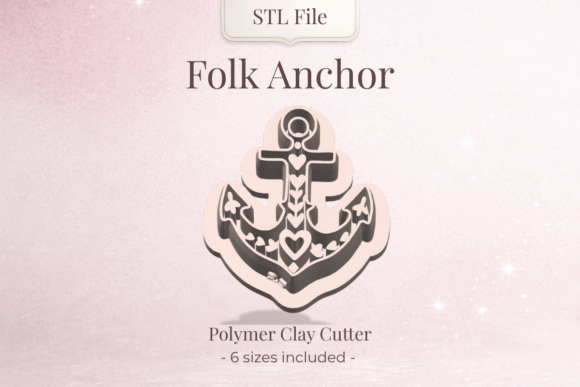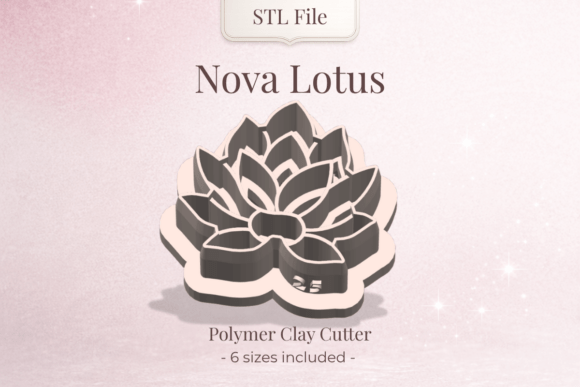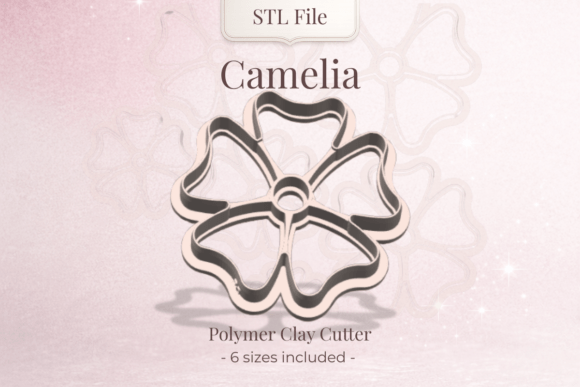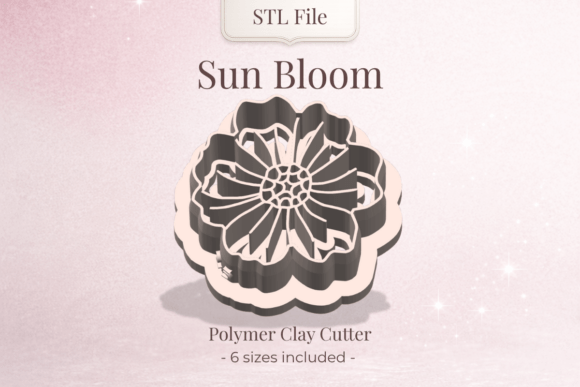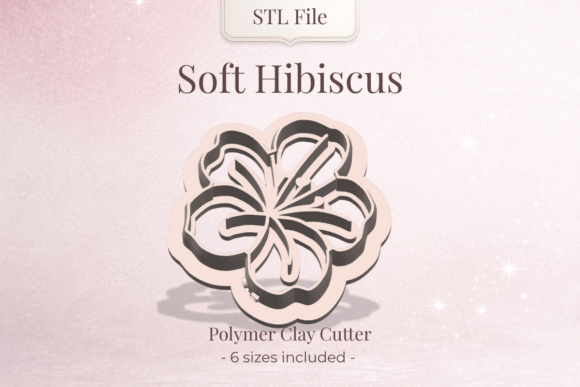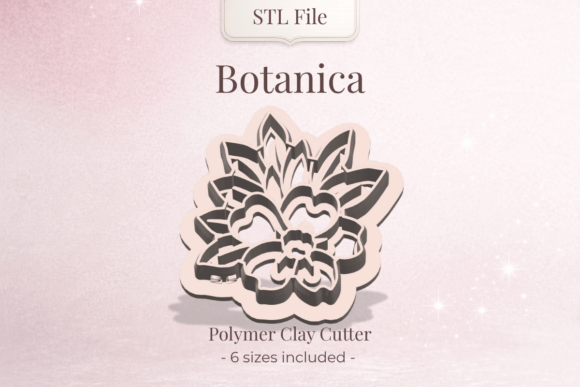
Clay Cutter STL – Botanica Flower: A Practical Evaluation
In the realm of polymer clay jewelry making, consistency is often the difference between a batch of professional-grade earrings and a collection of mismatched curiosities. The Clay Cutter STL – Botanica Flower addresses this fundamental need by offering a digital solution for creators who own FDM 3D printers. Designed by S.I. Originals, this specific file represents the Petunia flower, a classic botanical shape that remains a staple in floral jewelry design. Unlike purchasing physical cutters one by one, which can be costly and limit size options, this digital asset allows artists to manufacture their own tools on demand. This approach shifts the workflow from passive consumption to active production, granting makers control over material quality, size, and inventory.
The Value of Digital Tooling in Polymer Clay Workflows
For professionals and serious hobbyists alike, the transition to digital tooling is driven by efficiency and customization. The Clay Cutter STL – Botanica Flower file is not merely a graphic; it is a functional blueprint optimized for additive manufacturing. When evaluating its worth, one must consider the cost-benefit analysis of printing versus buying. Commercial polymer clay cutters are often made of steel or plastic, but they come at a fixed price per unit and limited sizing. By downloading this STL file, an artist gains access to six distinct sizes ranging from 25 mm to 50 mm in a single purchase. This scalability is particularly valuable for studios producing matching sets or collections where size variation is required without sacrificing design integrity.
The practical value extends beyond simple economics. It offers immediate availability. There is no shipping wait time, no risk of lost packages, and no reliance on third-party inventory. For a jewelry maker preparing for a market event or a deadline, the ability to print a replacement cutter overnight if a favorite tool breaks or wears down is a significant operational advantage. The design philosophy behind this file prioritizes utility, ensuring that the resulting physical object performs as well as, if not better than, mass-produced alternatives.
Design Specifications and Structural Integrity
A critical factor in the performance of any 3D printed tool is the precision of its geometry. The Clay Cutter STL – Botanica Flower features a specifically engineered 0.4 mm cutting edge. In the context of FDM printing, maintaining such a fine detail requires careful calibration, but the design accounts for standard nozzle diameters to ensure the edge remains sharp enough to slice through cured or raw polymer clay cleanly. A dull or thick edge results in ragged petals and uneven thickness, requiring extensive sanding and finishing later in the process. This design mitigates that issue by focusing on a thin profile that minimizes friction during the cutting action.
Furthermore, the wall thickness of the cutter is designed to be sturdy. Many low-quality STL files result in fragile prints that snap under the pressure of pushing through dense clay. The Botanica Flower model balances weight and durability, providing enough rigidity to withstand repeated use without deforming. The Petunia shape itself is rendered with clear definition, capturing the layered nature of the flower's petals. This level of detail ensures that the final clay impression retains the elegance necessary for high-end jewelry pieces. The inclusion of multiple sizes within a single download package—25 mm, 30 mm, 35 mm, 40 mm, 45 mm, and 50 mm—allows for versatile application, from delicate stud earrings to statement pendants.
Optimization for FDM Printing and Material Selection
The success of the Clay Cutter STL – Botanica Flower relies heavily on the printing process. The file is explicitly optimized for FDM (Fused Deposition Modeling) printers, the most common type of desktop 3D printer. This optimization suggests that the layer lines and infill settings have been considered to prevent weak points in the structure. For best results, users should consider using PLA (Polylactic Acid) or PETG. PLA is generally easier to print with and offers good dimensional stability, while PETG provides increased toughness and heat resistance, which can be beneficial if the cutters are exposed to warm environments during the baking process.
When printing these cutters, attention to print orientation is vital. Printing the cutter flat usually ensures the strongest bond between layers along the cutting edge, although it may require support structures depending on the complexity of the Petunia's inner details. Conversely, printing vertically might reduce the need for supports but could compromise the sharpness of the edge due to layer stepping. The designer's intent appears to favor a balance that maximizes the strength of the cutting rim. Users should calibrate their slicer settings to ensure a high perimeter count, which reinforces the outer walls and prevents the clay from slipping into gaps during cutting.
Real-World Performance and Usability
In practice, the Clay Cutter STL – Botanica Flower functions similarly to traditional metal cutters, provided the print quality is maintained. The primary advantage lies in the clean separation of the clay. Because the edges are crisp, the resulting Petunia shapes emerge from the clay slab with minimal distortion. This reduces the amount of cleanup required, saving time in the long run. For artists working with soft clays like Fimo Soft or Premo, the smooth surface of a well-printed PLA cutter glides through the material effortlessly.
However, there are realistic limitations to consider. While durable, a 3D printed cutter is not indestructible. Over hundreds of uses, the cutting edge may eventually dull, especially if used on very hard clay or if excessive force is applied. Unlike steel cutters that can be sharpened, a worn PLA cutter is typically replaced by printing a new one—a testament to the economic efficiency of the digital model. Additionally, the surface finish of the printed cutter will transfer slightly to the clay. If a perfectly smooth finish is required on the back of the flower, users may need to lightly sand the bottom of the printed cutter before use. Despite these minor considerations, the overall effectiveness for creating consistent floral components is high.
Ideal User Profiles and Application Scenarios
This resource is particularly well-suited for several specific groups. First, small business owners and Etsy sellers who specialize in floral jewelry will find the Clay Cutter STL – Botanica Flower invaluable for scaling production. Having a range of sizes available instantly allows for rapid prototyping of new designs. Second, educators and workshop leaders benefit from the ability to create custom teaching aids or distribute unique tools to students. Third, DIY enthusiasts who enjoy the intersection of crafting and technology will appreciate the hands-on experience of designing and fabricating their own tools.
The file is less suitable for those who do not own a 3D printer or lack the technical confidence to operate one. While the file is ready to print, the barrier to entry includes the hardware and software knowledge required to produce a high-quality result. For those without access to printing technology, purchasing a pre-made cutter remains the more practical option. However, for the target audience of tech-savvy creators, the flexibility offered by this digital file transforms the way they approach their craft.
Long-Term Viability and Collection Expansion
Investing in the Clay Cutter STL – Botanica Flower is an investment in workflow flexibility. As trends in jewelry design shift, having a library of digital cutter files allows artists to adapt quickly without accumulating physical clutter. The Petunia design is timeless, ensuring that the cutter remains relevant across seasons. Moreover, the ability to print spares means that a studio never has to halt production due to a broken tool. The longevity of the digital file is infinite, whereas physical tools degrade over time.
Ultimately, this STL file represents a modern approach to traditional crafts. It bridges the gap between digital design and tactile creation, offering a reliable, cost-effective method for producing beautiful polymer clay flowers. For anyone looking to enhance their jewelry-making toolkit with precision, variety, and control, the Clay Cutter STL – Botanica Flower delivers tangible value that extends far beyond a single download.