Clay Cutter STL – Floral Earring: A Practical Evaluation
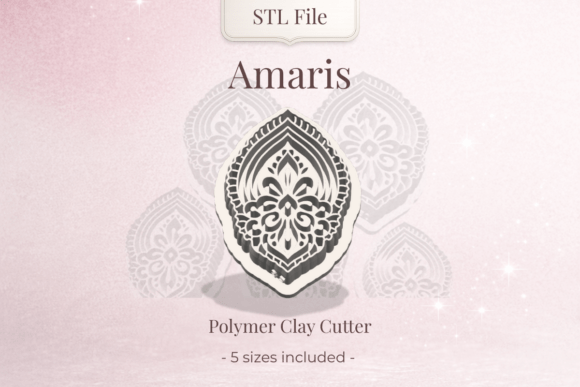
For polymer clay artists and jewelry makers, the ability to produce consistent shapes is often the difference between a hobby project and a professional product line. The Clay Cutter STL – Floral Earring, specifically the Amaris design by S.I. Originals, represents a digital solution for creators who own or have access to FDM 3D printers. Unlike traditional metal cutters purchased from craft supply stores, this tool exists as a digital file that must be printed before use. This distinction introduces a unique set of benefits, tradeoffs, and considerations that potential users must weigh before deciding if this resource aligns with their workflow.
Understanding the Digital Cutter Concept
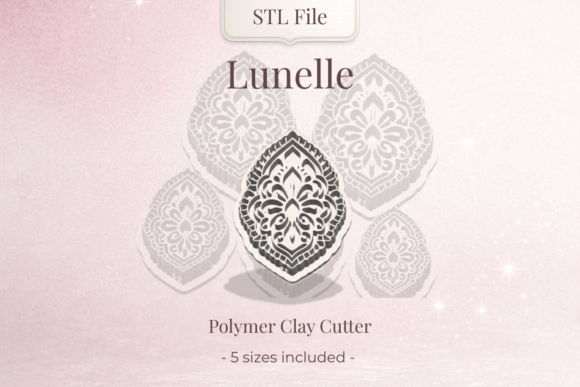
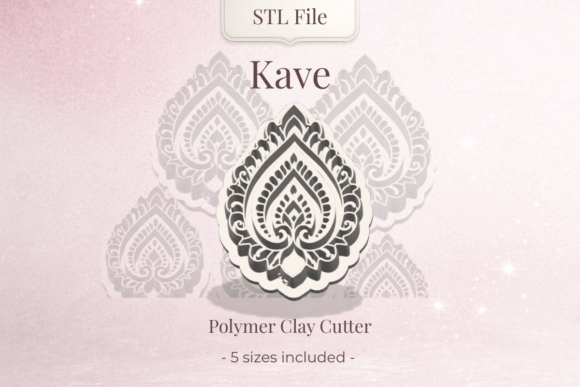
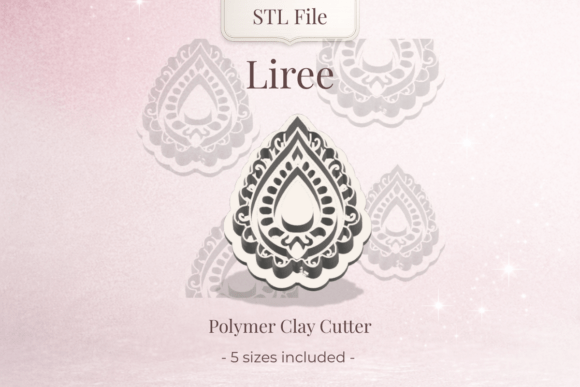
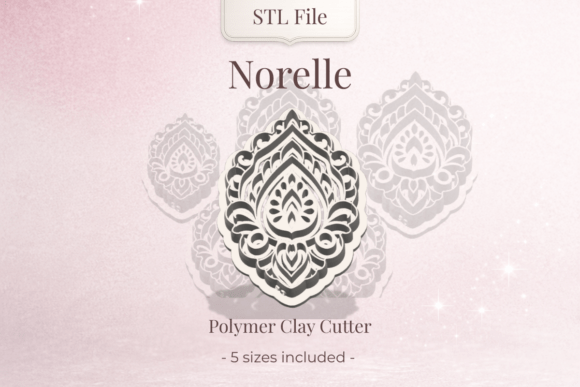
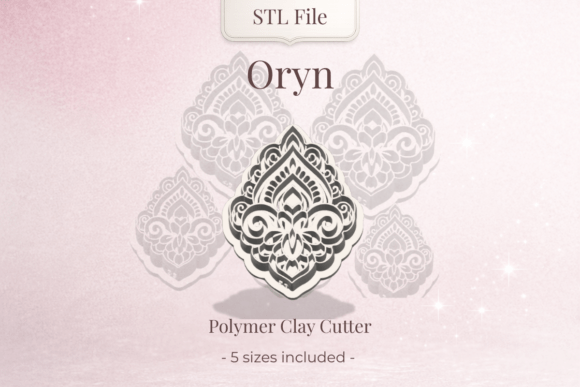
The Clay Cutter STL – Floral Earring is not a physical object you can hold immediately upon purchase; it is a blueprint for one. An STL file is a standard format used in 3D printing that describes the surface geometry of a three-dimensional object. In this specific case, the file contains the data required to print five distinct sizes of a floral-shaped cutter: 30 mm, 35 mm, 40 mm, 45 mm, and 50 mm.
Once printed using materials like PLA (Polylactic Acid), the resulting object functions similarly to a traditional cookie cutter but is engineered specifically for the density and texture of polymer clay. The design incorporates a 0.4 mm cutting edge intended to slice through the clay cleanly without excessive resistance. For those unfamiliar with 3D printing, this process requires a shift in mindset from buying a finished tool to manufacturing one, which fundamentally changes the cost structure and time investment involved.
Why Artists Consider 3D Printed Cutters
Several factors drive interest in digital cutter files like the Amaris design. The primary motivator is often customization and scalability. Traditional metal cutters come in fixed sizes and shapes. If an artist needs a floral motif in a size that does not exist in standard catalogs—such as a precise 38 mm diameter—they are forced to modify existing tools or hand-carve each piece. With the Clay Cutter STL – Floral Earring, the user receives a range of sizes that bridge common gaps in the market.
Economic efficiency is another significant driver. Purchasing five individual metal cutters can cost significantly more than the price of a single digital download plus the minimal cost of plastic filament. For studios producing large batches of earrings, the ability to print multiple copies of the same cutter at home allows for parallel production workflows, reducing bottlenecks where only one cutter is available for a specific shape.
Furthermore, the Amoris design is optimized for FDM printing, meaning it accounts for the limitations of layer-based printing technology. The sturdy walls and specific edge geometry are calculated to prevent the plastic from deforming under pressure, ensuring the cutter remains functional over time.
Benefits and Performance Expectations
When evaluating the utility of this digital file, several performance characteristics stand out. The most notable benefit is the consistency of the cut. Because the cutter is manufactured digitally, every print of the 40 mm version will be identical, eliminating the human error inherent in hand-cutting shapes. This consistency is crucial for matching pairs of earrings or creating uniform components for larger jewelry pieces.
The inclusion of a 0.4 mm cutting edge is a deliberate engineering choice. Polymer clay requires a sharp edge to shear cleanly; dull edges tend to drag, causing the clay to tear or stick to the sides of the cutter. By designing the edge to be thin yet supported by a sturdy wall, the STL aims to mimic the performance of steel cutters while offering the durability of hardened plastic.
Additionally, the variety of sizes included (30 mm to 50 mm) provides immediate versatility. A creator can test different scales of the floral design within a single collection without needing to source new hardware. This flexibility supports rapid prototyping, allowing artists to determine the optimal size for their target audience before committing to mass production.
Tradeoffs and Technical Considerations
Despite the advantages, there are inherent tradeoffs when choosing a 3D printed cutter over a metal alternative. The most critical consideration is material durability. While PLA is strong enough for occasional use, it is softer than steel. Over hundreds of uses, the cutting edge may eventually wear down, particularly if the polymer clay contains hard fillers or if the user applies excessive downward force. Metal cutters generally offer a longer lifespan for high-volume commercial production.
Another factor is the technical barrier to entry. To utilize the Clay Cutter STL – Floral Earring, the user must possess a functioning FDM 3D printer and the skills to operate it. Recommended settings include a layer height of 0.16–0.20 mm and a print speed of 150 mm/sec. If these parameters are not met, the resulting cutter may have visible layer lines that catch on the clay or walls that are too weak to withstand pressure. Users without a printer must rely on third-party printing services, which adds cost and lead time, potentially negating the economic benefits.
There is also the issue of surface finish. Even with optimal settings, 3D printed objects have a slightly textured surface compared to the smooth polish of metal. While the interior cutting edge is designed to be clean, the exterior of the plastic cutter might require light sanding to ensure it slides smoothly through the clay without dragging.
Situations Where This Solution Fits Best
The Clay Cutter STL – Floral Earring is an ideal fit for specific scenarios. It is particularly well-suited for hobbyists and small-scale sellers who already own a 3D printer. For these users, the marginal cost of printing a new cutter is negligible, making it a low-risk way to expand their toolset. It is also excellent for artists who need unique sizing that is unavailable commercially. If a designer has a specific aesthetic requirement that demands a 42 mm floral shape, this digital approach offers a solution that off-the-shelf metal cutters cannot provide.
Furthermore, this tool is valuable for educational settings or creative studios teaching polymer clay techniques. The ability to print multiple cutters allows instructors to equip a whole class with the same specialized tool, fostering consistency in student projects without the high expense of purchasing industrial-grade metal sets.
When Alternatives May Be Preferable
Conversely, there are situations where a traditional metal cutter or a different method is superior. For high-volume commercial manufacturers producing thousands of units daily, the longevity of steel is essential. The risk of the plastic edge wearing down after heavy use could disrupt production schedules and compromise quality control. In these cases, investing in custom-made metal dies is a more sustainable long-term strategy.
If a user does not own a 3D printer and lacks the technical knowledge to troubleshoot print failures, the learning curve may be frustrating. The time spent calibrating the printer, adjusting layer heights, and fixing support structures might outweigh the benefits of the free or low-cost file. For beginners who simply want to start making earrings immediately, purchasing a ready-to-use metal cutter eliminates the manufacturing step entirely.
Finally, if the desired design is extremely intricate with very fine details, the resolution limits of standard FDM printing might result in a cutter that is too rough for delicate clay work. In such instances, injection-molded metal cutters or laser-cut acrylic alternatives might offer the precision required.
Decision-Making Insights
Deciding whether to acquire the Clay Cutter STL – Floral Earring depends largely on your current resources and production goals. If you have access to a 3D printer and value the ability to customize sizes and shapes, this digital file offers a practical, cost-effective expansion of your capabilities. It bridges the gap between generic tools and expensive custom molds.
However, if your priority is maximum durability for industrial output, or if you lack the equipment to manufacture the tool yourself, traditional metal cutters remain the industry standard. Ultimately, the Amaris design serves as a powerful example of how digital fabrication is changing the landscape of craft supplies, offering flexibility to those willing to engage with the technology. By understanding both the capabilities and the limitations of 3D printed tools, artists can make informed choices that best support their creative vision and business needs.