Clay Cutter STL – Floral Earring Lunelle: A Practical Evaluation for Jewelry Makers
For polymer clay artists and jewelry designers, the precision of a cutting tool often dictates the quality of the final piece. The Clay Cutter STL – Floral Earring Lunelle represents a specific approach to this challenge, offering a digital blueprint that allows creators to manufacture their own tools using standard FDM 3D printers. Unlike traditional metal cutters purchased from craft supply stores, this design shifts the production process to the maker's workshop, providing a customizable solution for creating consistent floral shapes. Understanding the mechanics, benefits, and limitations of this digital file is essential for anyone considering it as an addition to their studio toolkit.
Understanding the Design and Functionality
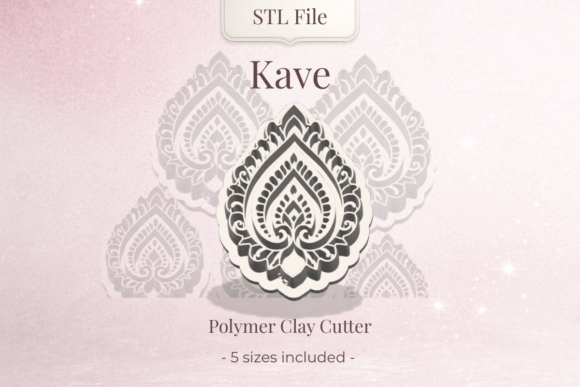
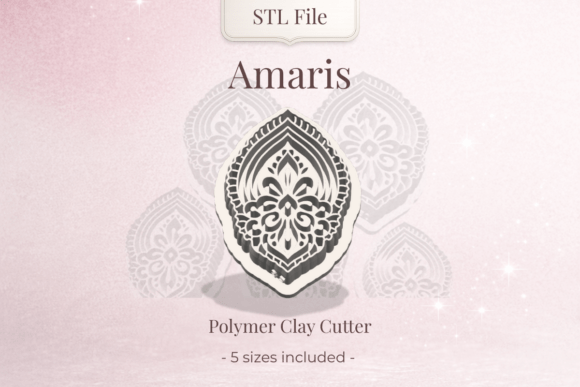
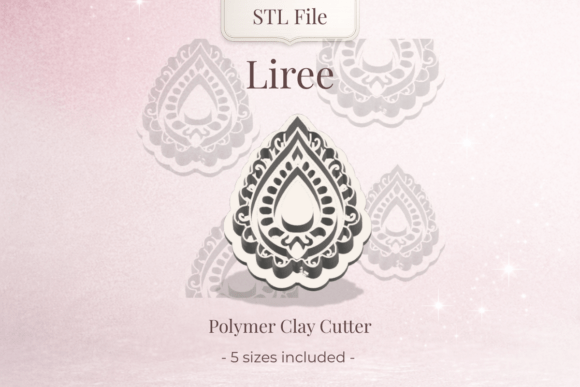
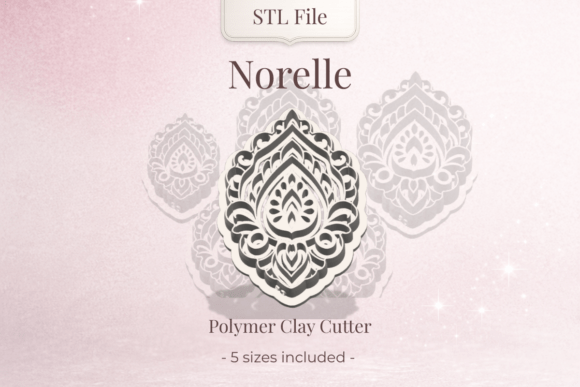
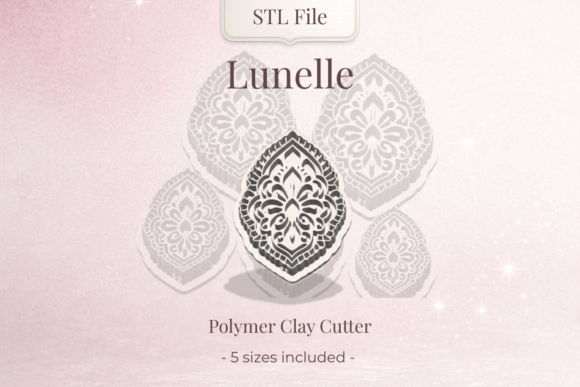
The core value of the Clay Cutter STL – Floral Earring Lunelle lies in its geometric optimization for polymer clay. Designed by S.I. Originals, the Lunelle shape mimics natural petal curves, making it particularly effective for botanical-themed jewelry. The digital file includes five distinct sizes ranging from 30 mm to 50 mm, allowing for significant variation in scale within a single project or collection. Each size features a calculated 0.4 mm cutting edge, a dimension chosen to balance sharpness with structural integrity during the printing process.
What distinguishes this STL file from generic cutter designs is the emphasis on wall thickness and edge geometry. Polymer clay requires a clean shearing action rather than a crushing one; if the walls are too thin, they may flex under pressure, resulting in jagged edges. If they are too thick, the material may not release easily. The Lunelle design addresses this by incorporating sturdy walls that maintain rigidity while the 0.4 mm edge ensures a crisp separation of the clay. This balance is critical for achieving professional-looking earrings without the need for extensive post-cutting cleanup.
Digital Files vs. Traditional Metal Cutters
When evaluating the Clay Cutter STL – Floral Earring Lunelle, it is necessary to compare it against the industry standard: pre-manufactured steel cutters. Metal cutters offer immediate usability and extreme durability. They can withstand years of heavy use without degradation and provide a razor-sharp edge right out of the package. For high-volume commercial production where thousands of identical pieces are required daily, metal remains the superior choice due to its longevity and consistency.
However, the digital STL format offers distinct advantages for hobbyists, small-batch creators, and experimental designers. The primary benefit is customization. With a physical metal cutter, you are limited to the sizes and shapes available in catalogs. The Clay Cutter STL – Floral Earring Lunelle allows you to print only the sizes you need at that moment. If a project requires a 35 mm cutter today and a 50 mm version next week, you can produce them on demand without purchasing separate inventory items.
Furthermore, the cost structure differs significantly. While a set of five high-quality metal cutters can represent a substantial upfront investment, the cost of PLA filament to print these same five sizes is minimal. The trade-off is the requirement for hardware and technical skill. You must own a functional FDM 3D printer and possess the knowledge to slice and print the file correctly. For those who already have a printer, the economic efficiency of the STL file is hard to match. For those without access to 3D printing technology, the barrier to entry makes traditional metal tools the more practical option.
Technical Considerations for Printing
The success of the Clay Cutter STL – Floral Earring Lunelle depends heavily on the printing parameters used. Because the tool is intended to interact with soft polymer clay, surface finish and dimensional accuracy are paramount. The recommended settings suggest a layer height between 0.16 mm and 0.20 mm. Using a higher layer height could result in visible ridges on the cutting edge, which might drag through the clay and leave imperfections on the finished earring.
Material selection is another critical factor. PLA (Polylactic Acid) or PLA+ is the suggested material due to its ease of printing and sufficient hardness for clay work. However, users should be aware that PLA has a lower heat resistance compared to engineering plastics like PETG or ABS. While this is rarely an issue for cold clay cutting, it means the tool should not be exposed to high temperatures, such as leaving it near a curing oven or in direct sunlight inside a hot car.
Print speed also plays a role in the final utility of the cutter. A speed of around 150 mm/sec is recommended to ensure the extruder lays down material consistently, particularly at the sharp corners of the Lunelle shape. Slower speeds might improve surface quality but increase production time, while faster speeds risk warping or layer shifting, which would compromise the cutting edge. Supports are generally required for the overhangs inherent in the handle and edge design; removing these supports cleanly is vital to ensure the cutting surface remains smooth.
Comparing Shape Versatility and Limitations
The Lunelle shape is specifically optimized for floral motifs, characterized by its elongated, curved form. This makes it an excellent choice for creating petals, leaves, or abstract organic forms. When comparing this to other popular cutter shapes, such as circles, squares, or scalloped ovals, the Lunelle fills a niche gap in the market. Many standard metal cutter sets lack this specific organic curve, forcing artists to hand-cut shapes with blades, which often leads to inconsistency.
However, the specialization of the Clay Cutter STL – Floral Earring Lunelle is also its limitation. It is not a universal tool. If your design aesthetic relies heavily on geometric symmetry or straight lines, this cutter will not serve your needs. Additionally, because the tool is printed in plastic, it is subject to wear over time. Unlike steel, which can be sharpened indefinitely, a worn PLA edge cannot be easily restored to its original sharpness. Once the edge dulls or chips, the cutter must be reprinted. This creates a cycle of maintenance that involves printing new tools periodically, whereas metal tools last for decades.
Another consideration is the range of sizes included. The file provides options from 30 mm to 50 mm. While this covers most standard earring sizes, some miniature projects might require smaller dimensions, or large statement pieces might need something larger. In such cases, the user would need to look for alternative STL files or modify the existing file in CAD software, adding another layer of complexity for those not comfortable with 3D modeling.
Decision Factors for Your Studio
Determining whether the Clay Cutter STL – Floral Earring Lunelle is the right choice for your workflow involves weighing several factors. First, assess your current equipment. If you do not have a 3D printer, the time and money required to acquire one and learn the slicing software may outweigh the savings on cutters. In this scenario, purchasing a set of metal cutters is likely the more efficient path.
Second, consider your production volume. If you are producing hundreds of pairs of Lunelle-shaped earrings per month, the durability of metal is preferable. The plastic cutter may degrade after a few hundred cuts, requiring frequent replacement. Conversely, for low-volume artisans, hobbyists, or those testing new designs, the ability to print a cutter instantly and cheaply is a significant advantage. It lowers the risk of experimentation; if a design doesn't sell, you haven't invested heavily in specialized tools.
Finally, evaluate your design flexibility. If you frequently change styles or need custom sizes that are unavailable commercially, the STL format offers unparalleled freedom. You can adjust the scale slightly or combine multiple prints to create unique variations. The Clay Cutter STL – Floral Earring Lunelle serves as a powerful resource for creative studios looking to expand their capabilities without the constraints of traditional manufacturing.
Practical Application and Workflow Integration
In a real-world studio setting, integrating the Clay Cutter STL – Floral Earring Lunelle into a workflow requires planning. A smart approach is to print a batch of cutters in different colors or materials to test durability. Some artists prefer to coat the printed PLA with a thin layer of epoxy resin to harden the cutting edge, extending the tool's lifespan. Others simply accept the consumable nature of the tool, keeping a spare printer queue ready to replace worn cutters as needed.
When working with the cutter, technique matters. Applying even, downward pressure is key. Because the material is plastic, twisting or prying motions can cause the tool to snap or deform. Users should treat the printed cutter with the care of a precision instrument rather than a heavy-duty implement. Proper storage is also important; keeping the cutters in a dry, cool environment prevents warping and ensures the 0.4 mm edge remains true for as long as possible.
Ultimately, the Clay Cutter STL – Floral Earring Lunelle represents a modern intersection of digital fabrication and traditional craft. It empowers makers to take control of their tooling, offering a flexible, cost-effective alternative to mass-produced metal goods. While it demands a certain level of technical proficiency and accepts trade-offs in durability, the benefits of customization and accessibility make it a compelling option for the evolving landscape of polymer clay artistry.