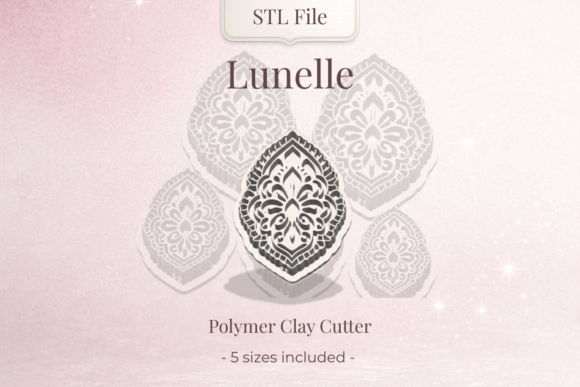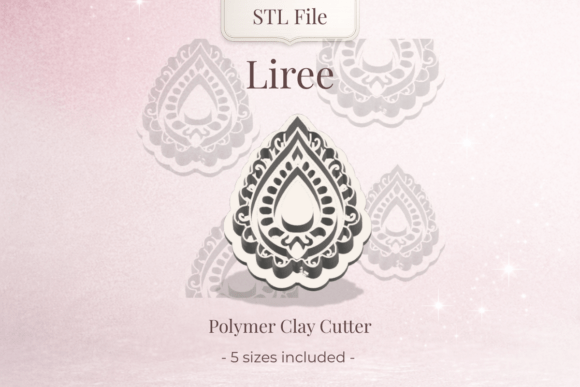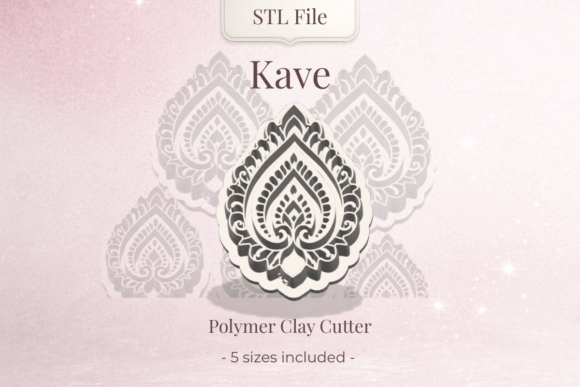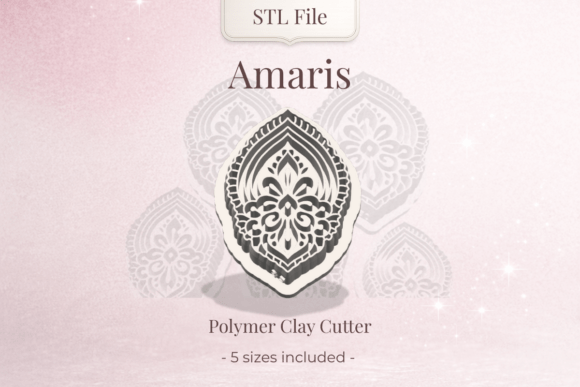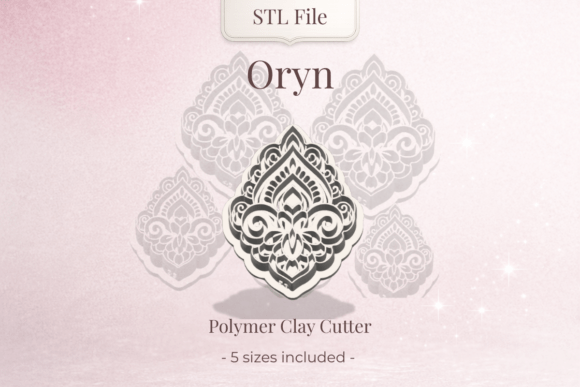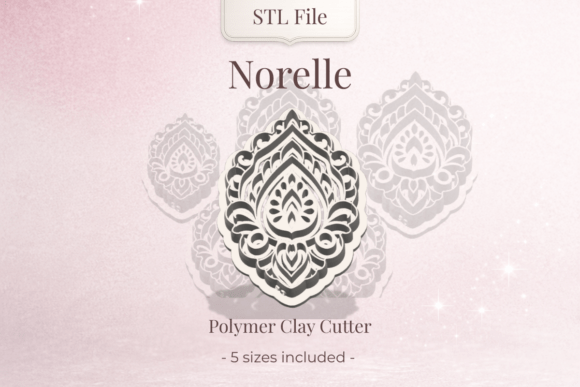
Clay Cutter STL – Floral Earring Norelle
For polymer clay artists and jewelry makers, the difference between a good piece and a professional one often lies in consistency. The Clay Cutter STL – Floral Earring Norelle offers a solution to the tedious process of hand-cutting intricate shapes. Designed by S.I. Originals, this digital file allows creators to 3D print their own precision tools using standard FDM printers. It transforms a simple desktop printer into a manufacturing hub for high-quality jewelry components, bridging the gap between digital design and tactile craftsmanship.
This specific cutter is not just another generic shape; it is an optimized tool engineered for the unique demands of polymer clay. Whether you are running a small Etsy shop, teaching a workshop, or simply refining your personal craft, having access to multiple sizes of the Norelle floral design ensures that your production workflow remains smooth and efficient. By downloading the STL files, you gain immediate access to five distinct sizes, ranging from 30 mm to 50 mm, allowing for versatile applications across different jewelry styles.
Why Precision Matters in Polymer Clay Jewelry
When working with materials like Premo!, Sculpey, or Fimo, the quality of the cut directly impacts the final appearance of the earring. Hand-cutting with blades often results in uneven edges, compressed clay at the perimeter, or slight variations in size that become noticeable when paired together. The Norelle cutter addresses these pain points through its specific engineering.
The design features a 0.4 mm cutting edge, which is thin enough to slice cleanly without squashing the delicate floral details. This precision ensures that the negative space within the flower remains crisp and defined. Furthermore, the sturdy wall structure of the cutter provides the necessary rigidity to push through thick slabs of clay without bending or warping. For a professional maker, this reliability means less time spent sanding edges and more time focusing on coloring, baking, and finishing.
Creative Possibilities with the Norelle Design
The versatility of the Norelle floral pattern opens up a wide array of creative directions. Because the STL download includes five different sizes, you can create matching sets that vary in scale, adding visual interest to your collections. Imagine a pair of earrings where one stud uses the 30 mm version for a subtle accent, while the dangle utilizes the 50 mm version as a statement piece. This variation creates a dynamic look that feels curated rather than repetitive.
Beyond simple solid-color cuts, the clean lines of the Norelle cutter make it ideal for advanced techniques:
- Mold Making: Use the cut-out pieces to press into silicone molds, creating custom stamps or texture sheets for future projects.
- Millefiori Canes: Cut slices of cane using the larger 45 mm or 50 mm cutters to reveal complex internal patterns within the flower shape.
- Layered Effects: Cut multiple layers in contrasting colors and stack them before baking to create depth and dimension within the floral motif.
- Enamel Work: Bake the clay pieces first, then use the sharp edges as a guide for applying vitreous enamel or resin fillings.
Artists can also adapt the Norelle shape for non-earring projects. The 40 mm and 45 mm sizes work exceptionally well for pendants, brooches, or even decorative elements on polymer clay phone cases and laptop skins. The organic nature of the floral design fits seamlessly into bohemian, vintage, or modern minimalist aesthetics, making it a staple tool for diverse design portfolios.
Optimizing Your 3D Printing Process
To get the best results from the Clay Cutter STL – Floral Earring Norelle, proper printing settings are crucial. While the design is robust, treating it like a standard plastic toy will result in a cutter that lacks the necessary sharpness. Since the tool relies on a 0.4 mm edge to function effectively, layer height plays a significant role in surface smoothness.
It is recommended to use PLA or PLA+ filament for these prints. PLA offers a good balance of rigidity and ease of printing, ensuring the walls remain straight under pressure. Avoid flexible filaments like TPU, as they may flex too much during the cutting action, leading to jagged edges.
Here are the suggested parameters for optimal performance:
- Layer Height: Set your slicer to 0.16 mm or 0.20 mm. A lower layer height reduces the "stair-step" effect on the cutting edge, resulting in a smoother finish on the clay.
- Print Speed: Maintain a speed of around 150 mm/sec. Slowing down slightly can improve dimensional accuracy, especially around the intricate curves of the flower petals.
- Supports: Generally, supports are not required for this design due to its vertical orientation and overhang-free geometry. However, if your specific printer struggles with adhesion, minimal brims may be added.
- Infill Density: Aim for 100% infill or a very dense gyroid pattern (at least 80%). A hollow cutter will collapse under the pressure of pushing through firm clay.
After printing, take a moment to inspect the cutting edge. If there are any minor imperfections or stringing, a quick pass with fine-grit sandpaper (400 grit or higher) can restore the razor-sharp profile needed for clean cuts. This small step significantly extends the lifespan of your printed tool.
Scaling Your Jewelry Business with Digital Tools
For entrepreneurs and small business owners, the ability to produce custom tools on demand is a game-changer. Purchasing physical metal cutters for every new design can be costly and slow, often requiring weeks for shipping. With the Norelle STL file, you can expand your inventory instantly. If customer feedback suggests a need for a smaller or larger version of the flower, you already have the files ready to go.
This approach also allows for rapid prototyping. Before committing to a full production run of a new collection, print a single cutter and test how the design looks with various color combinations. This agility helps reduce waste and ensures that only the most marketable designs reach your customers. Additionally, offering limited-edition runs based on specific cutter sizes can create a sense of exclusivity for your brand.
Educators and workshop leaders can also benefit from this resource. Instead of buying expensive metal cutters for every student, a teacher can print a set of durable PLA cutters for classroom use. This democratizes access to high-quality tools, allowing students to focus on creativity rather than budget constraints.
Ensuring Consistency and Quality Control
Consistency is the hallmark of a professional jewelry line. When using the Clay Cutter STL – Floral Earring Norelle, maintaining uniformity across batches requires attention to both the printing process and the clay preparation. Ensure that your clay is conditioned thoroughly before cutting. Over-conditioned clay may stick to the cutter, while under-conditioned clay might crumble.
Keep your printed cutters organized by size. Labeling your storage bins with the millimeter measurements (30 mm, 35 mm, etc.) prevents mix-ups during busy production days. Regularly check the cutting edge for wear and tear; while PLA is durable, it will eventually dull after thousands of cuts. Having a backup cutter printed and ready ensures your workflow never stops.
By integrating the Norelle cutter into your toolkit, you are investing in a system that values precision, creativity, and efficiency. It represents a shift towards a more adaptable, tech-enabled approach to traditional crafts, empowering makers to produce beautiful, consistent, and original jewelry with confidence.